
Why resale is no longer a CSR topic but a growth topic


Why resale is no longer just a CSR topic
For several years, second-hand was primarily associated with environmental concerns. It allowed brands to demonstrate their commitment, extend the lifespan of products and respond to a growing demand for more responsible consumption. This approach largely helped bring the topic to the surface, but it no longer explains why so many general managers, e-commerce teams and CRM directors are paying attention to it today.
The topic now goes beyond sustainability
The problem with an exclusively CSR framing is that it often places resale in a category of projects perceived as interesting but not a priority. As long as a topic remains presented as a communication tool or a responsibility initiative, it struggles to compete with initiatives directly tied to revenue, customer loyalty or profitability. Yet the topic has changed in nature.
Brands now face a continuous rise in acquisition costs, increasingly difficult customer loyalty to maintain and growing pressure on margins. In this context, resale appears as a concrete response to several business challenges. It makes it possible to better monetize products already sold, to create new interactions with existing customers and to enrich the overall value proposition of the brand.
This evolution is directly linked to the fact that the secondary market is already redefining perceived brand value.
Second-hand is becoming a growth driver
Consumers no longer buy a product solely for its immediate use. They also take into account its ability to retain value over time. A brand capable of organizing its secondary market strengthens not only its desirability but also the trust placed in its products.
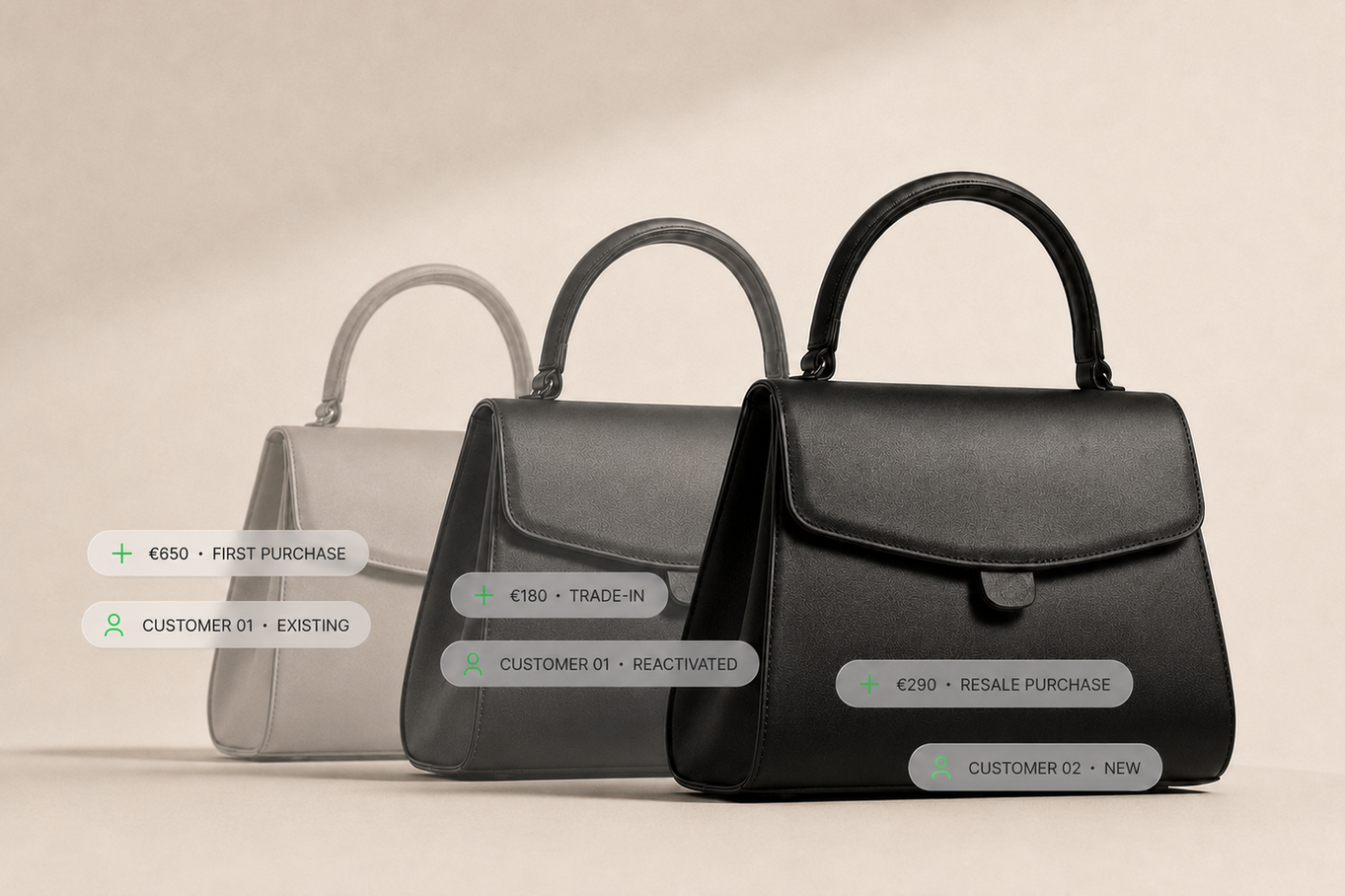
This transformation also changes the way growth is conceived. For a long time, growth relied essentially on selling new products. Today, the most advanced brands are also looking to better exploit the value already present in their existing product base. Every trade-in, every resale and every interaction linked to second-hand becomes a re-engagement opportunity.
Resale extends the customer relationship
Resale thus acts as a natural extension of the customer relationship. When a customer resells a product, they return to the brand's ecosystem. When another discovers the brand through a second-hand offer, they may become a full-price buyer tomorrow. Between these two moments, new contact opportunities emerge for CRM, retail and e-commerce teams.
This logic explains why trade-in is a genuine commercial lever.
Unlike a promotion, which directly reduces the price of a product, a trade-in valorizes an asset already owned by the customer. It puts purchasing power back into the brand's ecosystem while creating a new buying opportunity. This mechanism is particularly interesting for premium brands looking to stimulate consumption without degrading their positioning.
Better decision-making through customer insights
Resale also makes it possible to better understand customer behaviors. Which products retain the most value? Which categories resell the fastest? Which customer profiles use the trade-in service? This information enriches market understanding and strengthens the ability of teams to make better decisions.
The most advanced brands therefore no longer consider second-hand a simple image or responsibility topic. They integrate it into their thinking on growth, customer loyalty, customer value and overall commercial performance.
Conclusion
Resale is gradually changing category. What was yesterday a CSR topic is becoming today a growth topic. Brands that continue to consider it solely as a responsible initiative risk underestimating a lever capable of acting simultaneously on customer loyalty, re-engagement, product value and economic performance. For the most advanced brands, the question is no longer whether resale is relevant. The question is how to fully integrate it into their strategy.
Faume supports brands that want to take back control of their secondary market and structure a second-hand offer that is consistent with their image, organization and business model.
Read also
The secondary market is already redefining perceived brand value
What your brand loses when Its secondary market develops without It
.png)
.png)



Stay ahead of the game!
Sign up to FAUME's The Secondhand Review newsletter
Read inspiring stories from brands that have successfully launched their secondhand businesses with FAUME