
The cost of letting your resale market grow without you
What your brand loses when its resale market grows without you
Most brands know today that their products are being resold. Some see this as a positive sign of desirability. Others consider it a natural consequence of their success. Yet few of them truly measure what they give up when this resale market develops entirely outside their ecosystem.
When a product changes hands, it does not only carry economic value. It also generates data, customer relationships, signals about brand perception and valuable information about how consumers make their purchasing decisions. When the brand is not present, all of these elements benefit other players.
You lose control of your brand narrative
The first loss concerns brand narrative. A company invests considerably to build its image: art direction, merchandising, customer experience, content quality, product storytelling. On the resale market, this consistency often disappears. Products are photographed differently, described unevenly and presented in environments that do not always reflect the brand's standards. Yet customers continue to interact with the brand through these products.
This reality becomes all the more important given that the secondary market is already redefining perceived brand value.
Data accumulates elsewhere
The second loss is linked to data. Every second-hand transaction tells a story. It indicates which products retain the most value, which categories resell the fastest, which sizes are most in demand and which pieces suffer the steepest discounts. This information can inform pricing, collection and assortment decisions. When it is captured by third-party platforms, the brand continues to manage its business with only a partial view of reality.
Customer relationships grow beyond your reach
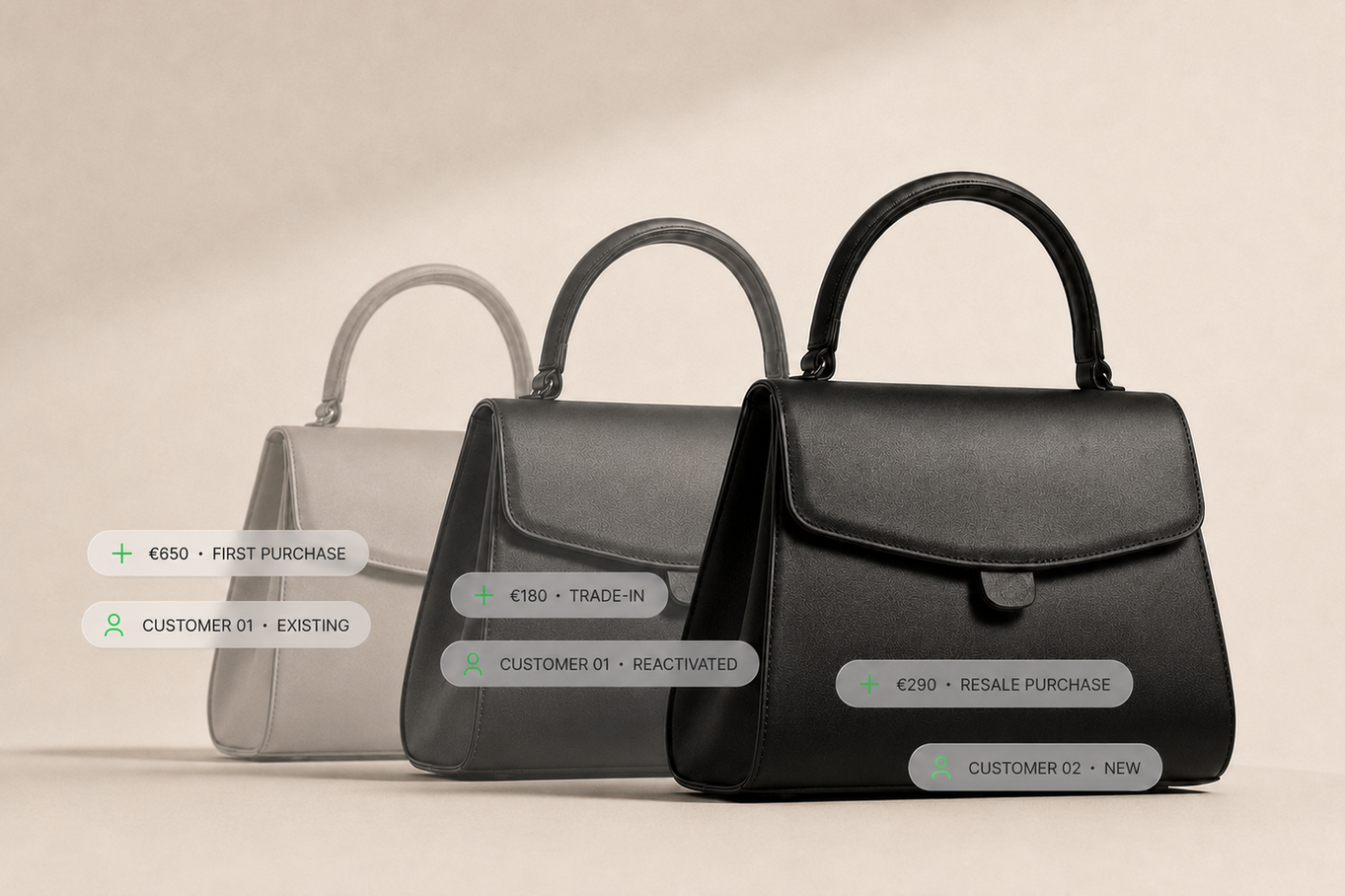
The third loss concerns customer relationships. The resale market often brings together extremely interesting profiles: loyal customers sorting through their wardrobes, consumers discovering the brand through a more accessible first piece, or buyers who maintain a lasting relationship with certain products. If these exchanges take place entirely outside the brand's ecosystem, it misses out on many re-engagement opportunities.
This situation is particularly damaging in a context where acquisition costs are rising and brands are looking to strengthen customer loyalty. Every trade-in or resale can become an opportunity to reconnect with a customer, feed the CRM or generate a new commercial interaction.
Pricing consistency becomes uncontrollable
The fourth loss directly affects pricing consistency. The secondary market now influences value perception. When a piece resells well, it reinforces the credibility of its original price. When it loses value quickly, it sends a different signal. Letting this market develop without governance means accepting that the perception of value is built by other players.
This challenge explains why the most advanced brands are actively managing their secondary market.
Time works against brands that wait
Finally, there is a more discreet but equally important loss: time. Some brands are still deferring the topic because they have other priorities. That caution is understandable. But while they wait, behaviors continue to take shape. Customers develop their habits, platforms strengthen their position and data accumulates elsewhere.
The longer a brand takes to understand its secondary market, the greater the risk of arriving too late. Not because it will no longer be able to act, but because it will need to rebuild knowledge that others will have already acquired.
Conclusion
When a brand’s resale market grows without it, the loss goes far beyond missed sales. The brand loses visibility into how its products retain value, how customers behave beyond the first purchase and how resale can support long-term growth. Products will be resold either way. The real question is who captures the data, customer relationships and value resale creates, and who turns them into a strategic advantage.
Faume supports brands that want to take back control of their secondary market and structure a second-hand offer that is consistent with their image, organization and business model
Read also
The Secondary Market Is Already Redefining Perceived Brand Value
.png)
.png)




Stay ahead of the game!
Sign up to FAUME's The Secondhand Review newsletter
Read inspiring stories from brands that have successfully launched their secondhand businesses with FAUME