
Why the secondary market is already redefining perceived brand value


Product value is now read over time
For a long time, brand value was read primarily through retail price, image, distribution and customer experience. That reading is no longer enough. Today, consumers also look at what happens to products after their first sale: their resale value, how quickly they sell, their level of depreciation and how they circulate on the secondary market.
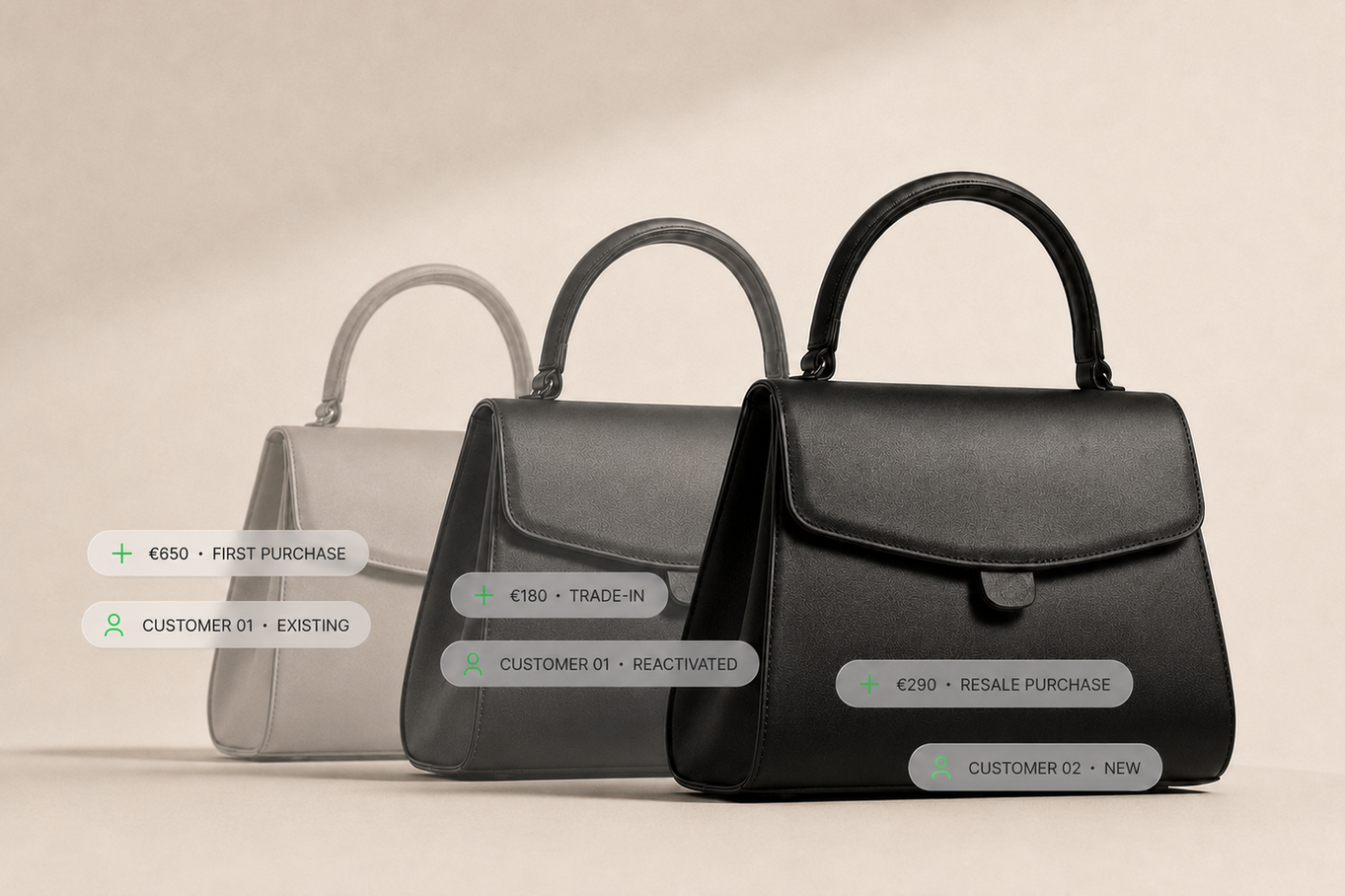
A product no longer says something about a brand only at launch. It keeps saying something over time. A piece that resells well sends multiple signals at once: it reflects lasting desirability, confidence in product quality and the ability to retain value over time. A piece that depreciates quickly tells a different story.
This shift partly explains why resale has become a growth topic and is no longer seen purely as a matter of engagement or responsibility.
The secondary market reveals what the market actually thinks
The secondary market acts as a particularly effective reveal. It surfaces the real depth of a brand's desirability, the coherence of its price positioning and the quality perception associated with its products.
A brand can claim it creates timeless pieces. The secondary market will show whether they continue to be sought after several seasons later. A brand can defend a premium positioning. The secondary market will show whether that premium holds over time. A brand can highlight the quality of its products. The secondary market will show whether that quality continues to be valued at resale.
The second-hand market is therefore no longer simply a space where products circulate. It becomes a space where the perceived value of a brand is concretely measured.
Not managing this market means letting others define the value
The secondary market develops whether a brand decides to participate or not. The real challenge is therefore no longer its existence but its control.
When a brand lets other players structure its secondary market, it gives up far more than potential revenue. It also gives up valuable data about its products, its customers and how its value is perceived over time. It loses part of its ability to influence the experience associated with its products once they are resold.
This is precisely what happens when the secondary market develops without the brand.
The real issue is strategic
Some brands still consider second-hand a peripheral topic. Yet the subject goes far beyond image or responsibility concerns.
If the secondary market already participates in how a brand is evaluated, then it becomes a strategic topic. It touches on desirability, pricing, customer loyalty, perceived quality and the value created over time. The most advanced brands no longer see resale as a side activity. They see it as a lever that allows them to take back control of part of the value already circulating around their products.
Conclusion
The secondary market no longer just comments on brand value it is beginning to redefine it. Leadership teams that continue to treat it as a secondary channel are falling behind on a fundamental point: value is no longer created only at the moment of the first sale. It is also measured by a product's ability to retain its desirability and value over time.
Faume supports brands that want to take back control of their secondary market and structure a second-hand offer that is consistent with their image, organization and business model.
Read also
Why Resale Is No Longer a CSR Topic but a Growth Topic
What Your Brand Loses When Its Secondary Market Develops Without It
.png)
.png)



Stay ahead of the game!
Sign up to FAUME's The Secondhand Review newsletter
Read inspiring stories from brands that have successfully launched their secondhand businesses with FAUME