
Should I launch a second-hand program at the risk of cannibalizing new product sales?

This is the question that now surfaces in every fashion and luxury executive committee.
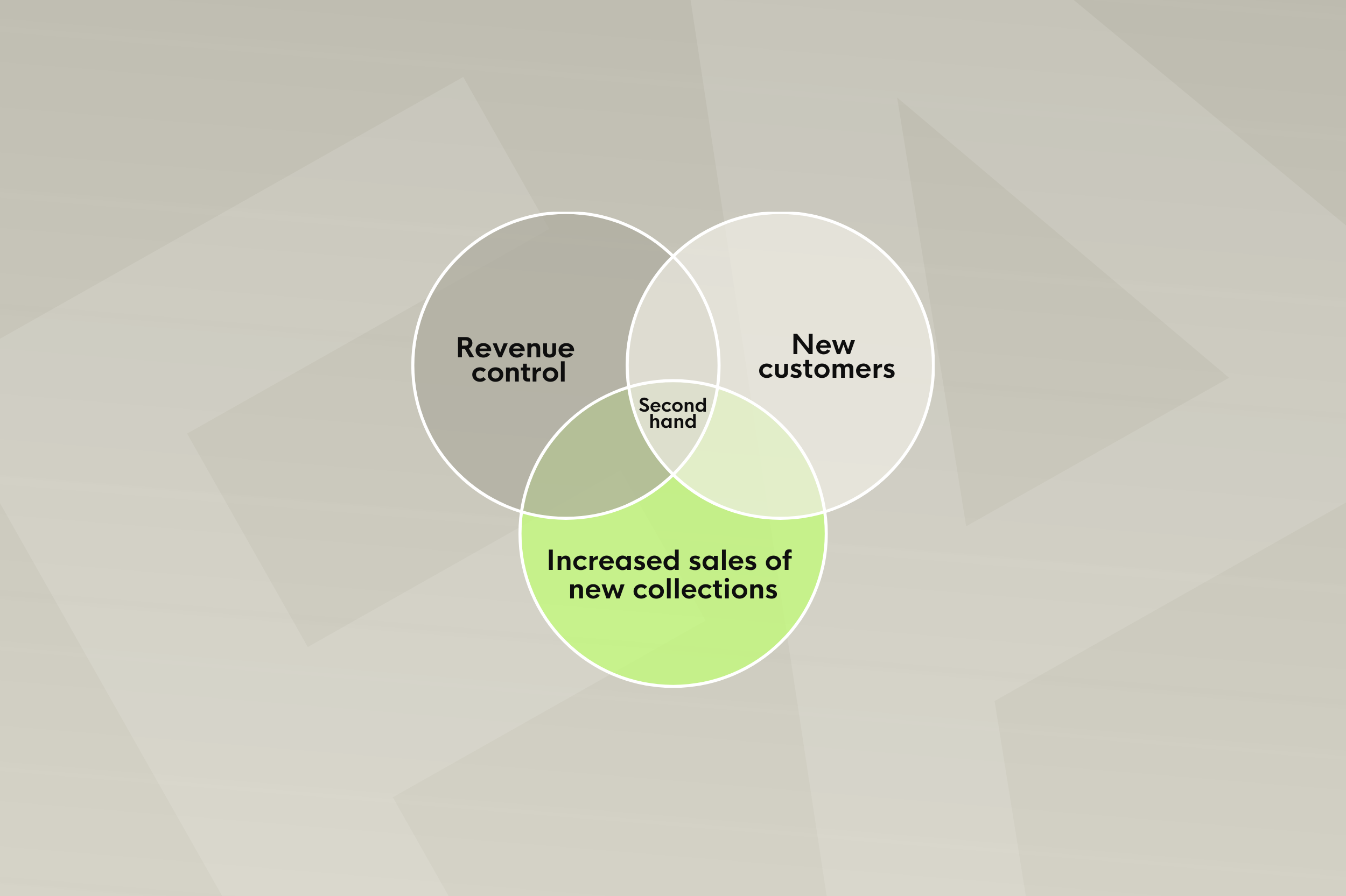
Yet the data shows a clear trend: second-hand does not “steal” sales from new products. Instead, it captures a business that would otherwise go elsewhere. And when designed thoughtfully, it can even strengthen the performance of new collections. In other words, cannibalization doesn’t occur when you implement a resale solution, and here’s how to understand it through three clear steps.
- Market context: The resale market can no longer be ignored
- Faume’s Resale Model make sure Second hand offer does not cannibalize first-hand sales
- According to Faume’s brand data, resale does not cannibalize new sales, it reactivates existing customers and brings new ones into the ecosystem.
1. Market context: The resale market can no longer be ignored
$360 billion. That is the projected size of the global second-hand fashion market by 2030, growing three times faster than the primary market (BCG x Vestiaire Collective). The resale apparel market already surpassed $200 billion in 2024, posting consecutive years of double-digit growth, far outpacing new product sales (GlobalData). In some markets, second-hand now accounts for nearly 10% of all apparel sales, and up to one-third of purchases among the most engaged consumers (The Guardian).
Whether or not a brand launches its own program, its products are already circulating massively on third-party platforms. Indeed, macro-level research shows the "substitution rate", the proportion of second-hand purchases replacing new ones, ranges from 30% to 65% (Journal of Cleaner Production, WRAP UK).
In fashion, cannibalization happens when a customer buys a second-hand item instead of a new one, usually on external marketplaces. The demand remains, but the brand loses the sale entirely. The problem isn't resale itself; the problem is losing control of it. Thus, the real question isn't whether resale cannibalizes new sales, it's whether brands will control this shift or let others capture the value ?
2. Faume’s Resale Model make sure Second hand offer does not cannibalize first-hand sales and drive incremental growth.
Faume’s model is designed to prevent substitution and transform resale into a revenue engine. Two mechanisms explain why it works.
A. Trade-in programs boost customer lifetime value and secure full-price sell-through
It increases the lifetime value of your existing customers and secures the sell-through of your new collection.
1. It stimulates re-engagement
Without a resale program, a customer with unused items in their closet has no reason to return to the brand. A trade-in offer brings them back into the ecosystem, online or in-store, creating an incremental CRM touchpoint at virtually zero acquisition cost.
2. It injects targeted purchasing power
The gift card issued through the trade-in process is time-bound, restricted, and usable only within the brand universe. It becomes additional, ring-fenced purchasing power that naturally guides customers toward higher-value items such as new collections, hero products, or signature lines.
The result: stronger loyalty, more frequent visits, and increased AOV on full-price collections.
B. Certified second-hand becomes a powerful acquisition channel without harming the full-price business
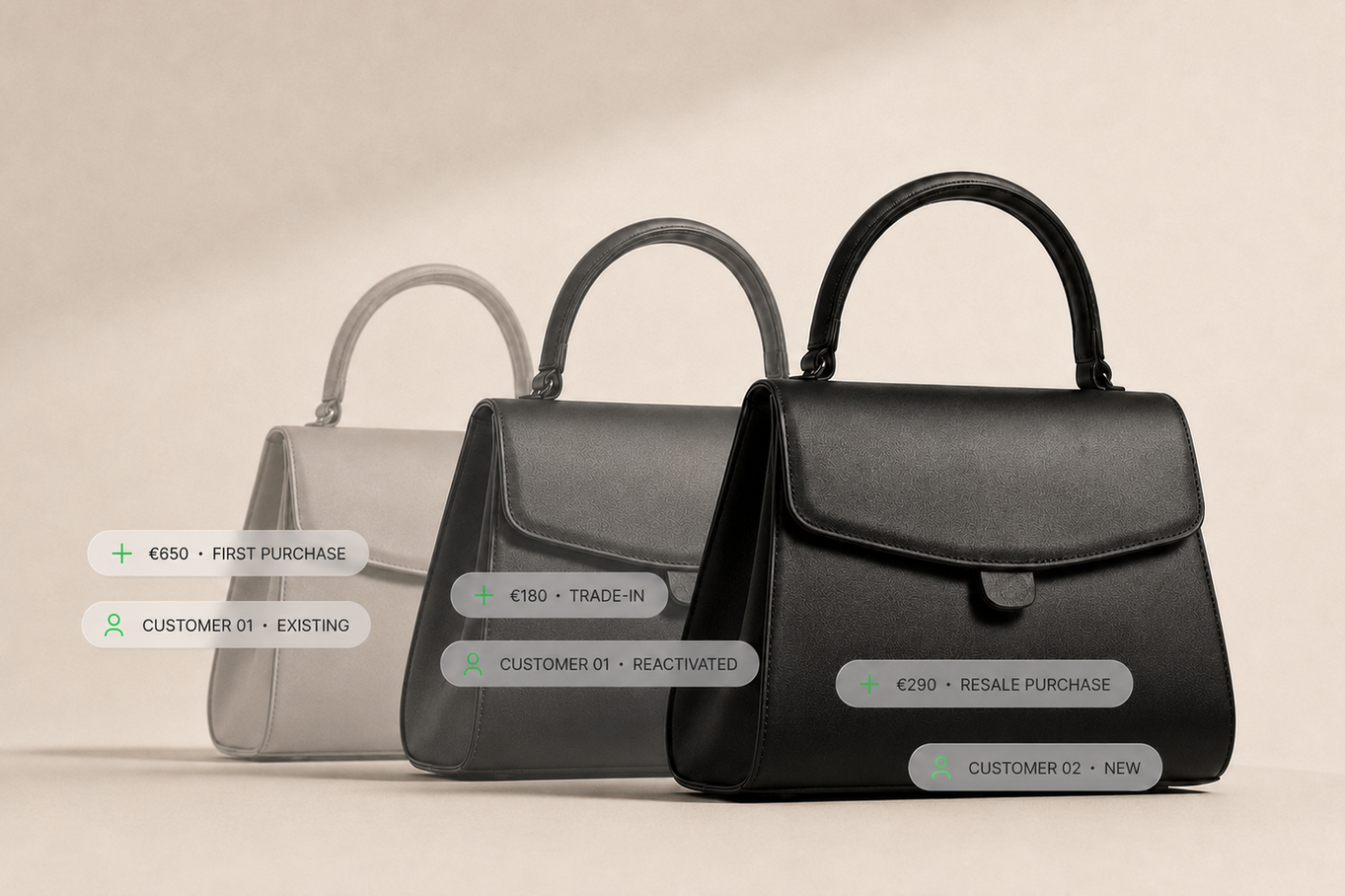
Faume’s “authenticated and reconditioned’’ pre-owned products allow brands to reach a younger, more price-sensitive audience, a segment that often does not buy new. This creates a dual-revenue cycle: the first sale comes from the new product, the second from the same product resold as certified pre-owned, and the seller is reactivated when they return to purchase new with their gift card. Instead of a single transaction, the brand unlocks two, while keeping both the buyer and the seller within its ecosystem. This generates two revenue streams from the same product: the initial new sale, followed by the second-hand resale, all while bringing the customer back into the brand’s ecosystem.
A customer who participates in trade-in generates more total revenue (new + pre-owned) than the same customer without a trade-in program.
3. Our clients’ data proves it
Across Faume’s partner brands, the evidence is unequivocal: resale doesn’t divert demand ; it expands it. And here are the numbers that prove it:
- 20% of sellers were not previously in the brand’s CRM database, allowing the brand to deepen its customer knowledge.
- 90% of resale-issued gift cards are redeemed on new products.
- 70% of second-hand dormant buyers:
- The new ones: those who had never purchased from the first-hand site, representing pure acquisition
- The inactives : those who had not bought anything for over two years, showing that resale reactivates dormant customers rather than cannibalizing active ones
Not launching resale does not stop cannibalization, it simply means you lose control over it. Substitution is already happening on third-party platforms.
A structured, integrated model like Faume’s changes the outcome entirely: it does not create cannibalization; it captures the value of a substitution that already exists.
The real strategic choice is clear: let resale happen outside your ecosystem with zero benefit, or take control of it and turn it into incremental revenue.
Experience it yourself → Book a demonstration
See how Faume’s technology empowers leading brands to launch and scale their resale programs with ease.
Book a personalized demo with our team and discover how quickly your resale solution can go live, seamless, efficient, and built for measurable growth.
.png)
.png)



Stay ahead of the game!
Sign up to FAUME's The Secondhand Review newsletter
Read inspiring stories from brands that have successfully launched their secondhand businesses with FAUME