
Ultra-luxury fashion and second-hand: why iconic bags never lose their value


In a world where financial markets are shaky, inflation chips away at savings, and uncertainty becomes the only constant, one category of assets remains resilient, gleaming, and locked tight: luxury handbags.
Not the ones bought on a whim on a Saturday afternoon. The ones we hunt down, covet, pass on, and resell.
Iconic pieces whether it’s the Hermès Constance, Dior Saddle, or a Phoebe Philo-era Céline Boston are no longer just accessories. They’ve become full-fledged investments. And in the second-hand market, their power multiplies.
The luxury handbag: a new benchmark of value
The comparison is no longer anecdotal. Today, owning certain bags is akin to holding a stock portfolio. Sotheby’s Luxury Bag Index reports an average annual return of +14%.
On rare models, returns can outperform gold or real estate. Even better: they remain largely unaffected by the wild fluctuations of traditional markets, protected by their cultural desirability.
This isn’t just a trend it reflects a shift in how people think about fashion consumption.
Buying a high-end bag is no longer just an emotional splurge it’s a tangible, visible, status-bearing, and resellable asset.
Second-hand as a liquidity catalyst
What’s making this market so dynamic today?
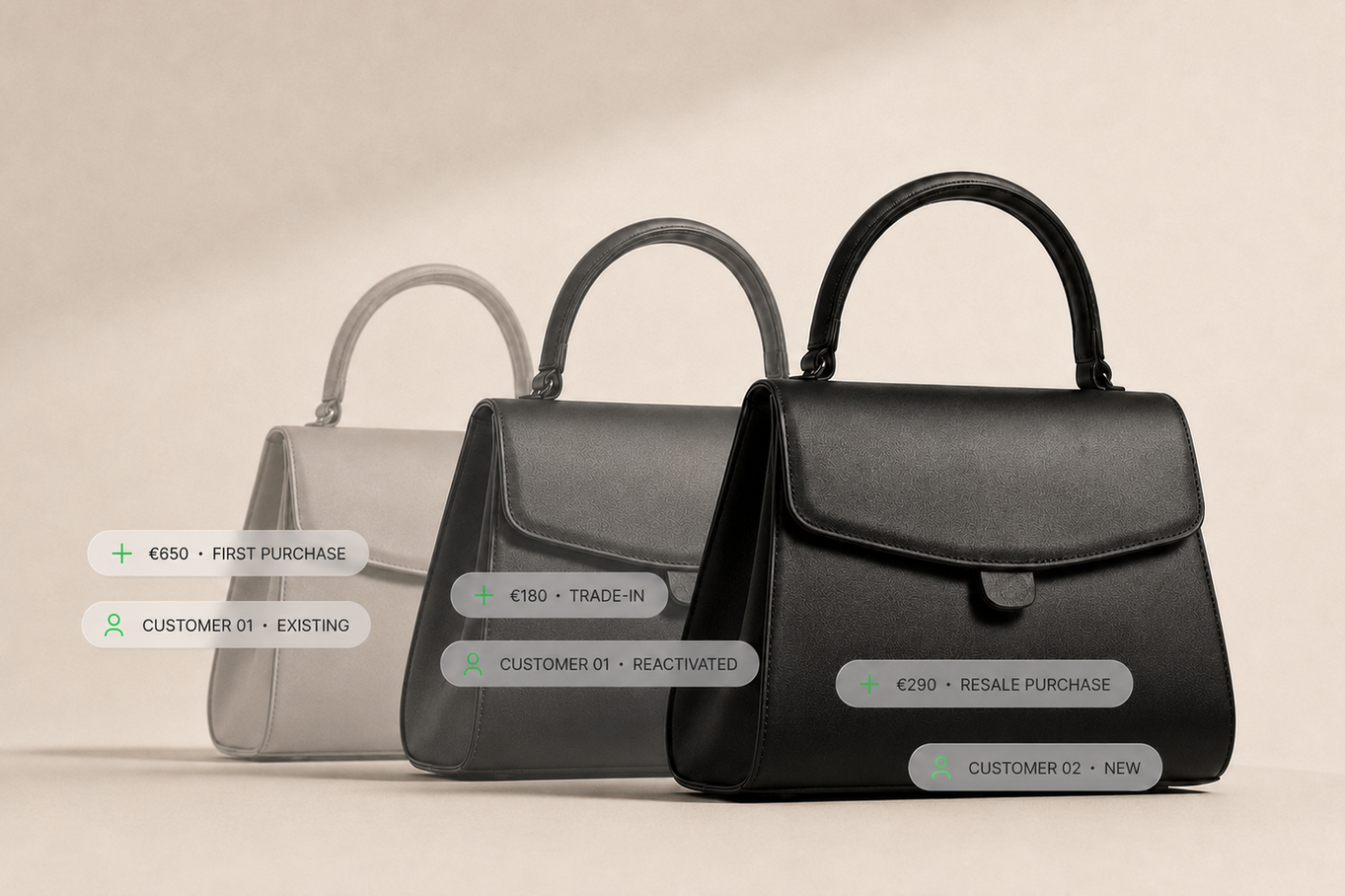
One key variable: the liquidity enabled by second-hand platforms and programs. By making the resale process simple, secure, and traceable, they transform a fashion object into an investment product.
With players like Faume, premium and luxury brands are reclaiming their secondary market. They provide their clients with an official, trusted, brand-aligned channel for reselling their pieces. The result: a circular ecosystem where reselling becomes as natural as buying.
And the numbers speak for themselves:
On platforms operated by Faume, over 85% of listed items sell within three months.
In-store programs generate up to 30% upsell through vouchers.
These are metrics any financial dashboard would envy.
Timelessness as a strategic asset
A second-hand bag’s value isn’t just about its original price. It’s about its ability to transcend time, seasons, and creative directions. A 1970s Gucci Jackie regularly makes a comeback in contemporary collections. A Nicolas Ghesquière-era Balenciaga Bowling is now a collector’s piece.
Some houses have fully embraced this. Loewe, under Jonathan Anderson, has reissued cult models and woven them into its heritage narrative. Alaïa highlights its legacy through a curated archive revival. Other brands choose to structure their own second-hand market, like Isabel Marant or Ami, who work with Faume to take back, authenticate, and resell their iconic pieces.
Circular fashion becomes a storytelling lever:
It’s no longer just an ESG strategy, it’s a way to give meaning, depth, and history to objects.
From handbag to investment portfolio
If brands want to capture this value, they need to think like asset managers. Why let Vinted or The RealReal siphon off the value of a bag that bears their name?
Why not offer customers an official, premium, on-brand solution and benefit from the returns?
Structuring a second-hand offering means not only controlling residual value, but also retaining customers who now see their purchases as liquid assets. It also appeals to a generation of consumers who reject planned obsolescence and for whom a purchase only makes sense if it can be recycled, revalued, reintegrated.
Conclusion: is circularity the new luxury?
In the world of luxury, scarcity has always driven desire. But today, it’s durability, in every sense, that redefines value. And brands that combine product excellence, stylistic legacy, and a circular strategy are no longer just creating handbags — they’re creating financial objects of desire.
At Faume, we support the brands reclaiming control of their secondary market and turning circularity into a growth engine.
Because in luxury, the future is no longer just bought at full price.
It’s invested in.
.png)
.png)


Stay ahead of the game!
Sign up to FAUME's The Secondhand Review newsletter
Read inspiring stories from brands that have successfully launched their secondhand businesses with FAUME